- +44 7932 089286

Wealth Builders Blueprint 1 Section6 Lessons3 Hours
Lesson 3: Understanding the system
Lesson 3: Understanding the System
Welcome to Lesson 3
Most people interact with financial and welfare systems every day without ever understanding how they were built, why they were built, or most importantly — what their limitations are.
In this lesson we look at the UK benefits and welfare system — its origins, its purpose, and the important gap it was never designed to fill.
Because a wealth builder does not just live inside systems. They understand systems — and build above them.
How the Modern Welfare State Was Built
1. Early Foundations — The Poor Laws (1601 onwards)
The earliest version of welfare in England came through the Elizabethan Poor Laws. Local parishes collected taxes to support the poor, elderly, sick, and unemployed.
The mindset was: prevent social unrest, stop starvation, manage poverty locally. This system was often harsh and deeply stigmatising.
2. The Modern Welfare State — The Beveridge Report (1942)
The biggest turning point came during World War II when William Beveridge identified what he called the Five Giants destroying society:
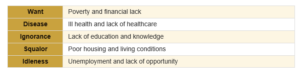
His vision was that citizens should have protection from cradle to grave. This became the blueprint for National Insurance, state pensions, unemployment support, child benefits, disability support, and the NHS.
3. Why Was It Created?
The welfare state was designed for several purposes simultaneously:
• Humanitarian — no citizen should fall into absolute destitution
• Economic stability — income support keeps people spending and societies stable
• Political stability — extreme inequality creates instability and revolution risk
• Workforce preservation — healthy, educated people are more economically productive
In other words: The welfare state was not just charity. It was national infrastructure.
4. The Built-In Tension
A welfare system has a permanent built-in tension between protection and dependency.
Critics argue it can discourage work, risk-taking, entrepreneurship, or wealth creation if incentives become distorted. Supporters argue it prevents social collapse and protects vulnerable people.
Both sides contain truth.
A strong society needs safety nets AND ladders upward. If you only build safety nets, people survive but do not necessarily thrive. If you only build ladders, vulnerable people get crushed.
5. The Critical Gap — The System Was Built for a Different Era
The original welfare model was designed in an industrial economy — stable jobs, factories, long-term employment, one employer for decades.
Today’s economy is gig-based, AI-disrupted, entrepreneurial, digital, and global.
That means the welfare system was built for an economic world that no longer fully exists.
This is exactly why conversations around financial literacy, ownership, multiple income streams, digital income, and generational wealth are no longer optional — they are essential.

LESSON 3 REFLECTION
Take a few minutes to answer these questions honestly:
1. In what ways has a system — financial, social, or personal — been a safety net for you?
2. Is there anywhere a safety net has become a ceiling — somewhere you have stopped building because support was available?
3. What is one thing you can begin building this month that moves you above the system and toward the Broad Place?
Write your answers in your journal or drop them in the Blueprint Actions and Wins category in the community.
You have completed the first three lessons of The Wealth Builder Blueprint.
You now know the DNA of a wealth builder. You know that Scripture has always called you to build. You understand the systems around you — and why you must build above them.
But we are just getting started.
In the next three lessons we go even deeper:
Lesson 4 — Reset Your Blueprint — identity, healing, and discovering what is in your hand
Lesson 5 — Build With Structure — systems, discipline, and navigating pitfalls
Lesson 6 — Build for Legacy — finishing well, managing success, and leaving something that outlives you
Head to Lesson 4 when you are ready. The broad place is built one lesson at a time.
When you have finished this lesson — click the Mark as Done button at the top right to track your progress and move to the next lesson!